
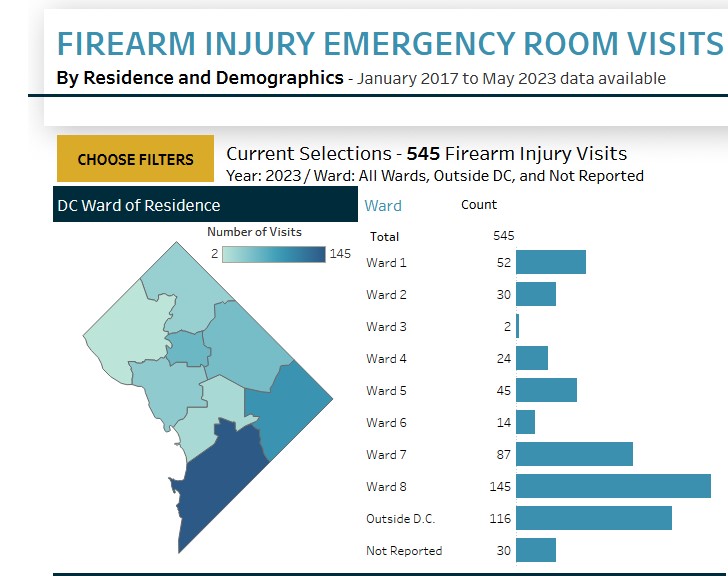
A new dashboard is tracking how many people show up at D.C.-area hospitals with gun injuries.
Why it matters: Gun violence and homicides are on the rise from last year.
Hospitals can use the tool to schedule more staff or adjust resources during certain days or times when they might see more victims, Kenan Zamore, an injury epidemiologist at DC Health, tells Axios.
How it works: The dashboard, which launched last week, pulls data from local emergency rooms to track how many people were treated for gun injuries. It breaks down the data by age, ethnicity, and ward residence.
It also has heat maps for the day and time patients arrived at the hospital.
Zoom out: Virginia launched a similar dashboard last year.
By the numbers: There have been 545 firearm visits to D.C. Emergency Departments between January and May of this year, with 399 of those involving D.C. residents.
More than half of the injuries were people aged 18-34 as well as Black residents. More than 87% were men.
Just over a quarter of the injuries were among residents of Ward 8.
Around 10pm on Fridays and 11pm on Saturdays were the most common times those with gun injuries visited the ER.
Yes, but: D.C.’s dashboard doesn’t differentiate between assaults, accidents, and self-inflicted shootings, nor whether the shooting occurred in or out of the District.
It doesn’t describe how severe an injury is or whether the victim died from their injuries.
- The dashboard also doesn’t account for an individual who visits the ER multiple times for a shooting injury.
What they’re saying: Zamore says firearm injuries can require multiple clinical visits — from getting sutures removed to treating mental health issues from the trauma.
The bottom line: Zamore says he hopes people use the dashboard to get a fuller picture of the “true toll of firearm injuries in the city.”
- “People should know how many people are in the ER. That can have implications as far as firearm safety.”
What we’re watching: DC Health plans to expand its data collection by the end of the fiscal year to include where homicides are occurring.
 1DCAC
1DCAC 
You must be logged in to post a comment.