
Brian L. Schwalb
Brian L. Schwalb has committed his legal career to using the law in service of others, advocating for what matters most to the people and organizations he represents. As the District of Columbia’s second independently-elected attorney general, Brian is committed to fighting for D.C., advancing the public interest, and ensuring that the law works to make the District safer, healthier, and more equitable for all who live and work here.
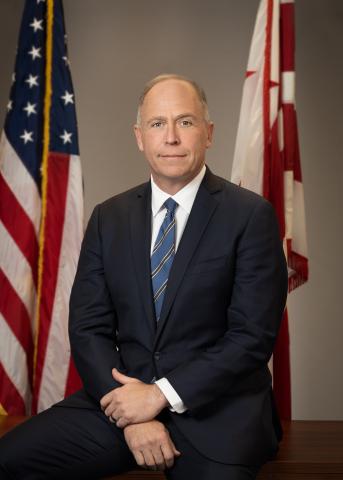
Brian is a third-generation Washingtonian. After graduating from Duke University and Harvard Law School, and completing a two-year judicial clerkship, Brian served as a trial attorney in the Tax Division of the U.S. Department of Justice. After completing his service with the Justice Department, Brian entered private practice representing clients – individuals, businesses, nonprofits and families — in a multitude of high stakes matters including advocating for people injured by excessive, unconstitutional police force, defrauded out of their assets, and fighting for their lives on death row.
Among other professional recognitions, Brian is a fellow of the American College of Trial Lawyers, whose membership is limited to the top 1% of area trial lawyers and whose careers have reflected the highest standards of ethical conduct, professionalism, civility, and collegiality. Brian is also an experienced law firm leader, having served as Venable’s firm-wide Vice Chairman and then as the Partner-in-Charge of Venable’s D.C. office.
Outside the practice of law, Brian has volunteered his time, legal services, leadership, and mentorship to organizations dedicated to enhancing D.C.’s justice system, mentoring D.C. Public School students, and reducing the local impact of HIV/AIDS. Brian is also an active supporter of cancer treatment and prevention, Holocaust education, and has served as an officer and trustee of his synagogue.
Cure the Streets: OAG’s Violence Interruption Program
Cure the Streets is a pilot public safety program launched by OAG aimed at reducing gun violence. It operates in discrete high violence neighborhoods using a data-driven, public-health approach to gun violence by treating it as a disease that can be interrupted, treated, and stopped from spreading. Research and data show that empowering communities to interrupt violence, intervening with those most likely to commit or be victims of violence, and changing norms around violence can have long-lasting impacts. That’s why OAG launched Cure the Streets in several targeted neighborhoods that have historically experienced some of the highest rates of gun violence. OAG staff manage grants to organizations that administer the program and monitor data regarding its efficacy.
Cure the Streets is based on the Cure Violence Global model, which employs local, credible individuals who have deep ties to the neighborhood in which they work. Here how’s the program works:
- Outreach workers and violence interrupters de-escalate conflicts, attempt to resolve them through mediation, and avert potentially fatal shootings.
- They work to develop relationships with residents who are at high risk of being involved in gun violence so they can detect and mediate conflicts, prevent shootings, and improve public safety.
- After mediating a conflict, the violence interrupters remain engaged with the participants, in part to ensure the mediation results in a lasting peace, and to help connect the person with services and to help them live non-violent lives.
Cure the Streets is designed to address certain types of gun crimes, those that result from reciprocal violence. It is not intended to address, for example, intimate partner violence or violence related to random crime.
The Cure Violence public health approach to violence reduction has had success in cities across the country. But it is not solution by itself. Rather, Cure the Streets and violence interruption efforts are a needed piece in a much larger effort to reduce crime and violence, that includes the critical work of police, prosecutors, more involvement in trauma reduction services, and workforce development. Those larger efforts to improve public safety also should include aggressive gun safety reform, holding individuals accountable when they commit crimes and changing their behavior, so they are less likely to reoffend in the future, and addressing the root causes of crime in our communities – including poverty, hopelessness, and trauma – to break the cycle of violence.
Cure the Streets Sites
OAG launched the program in the summer of 2018. In December 2019, four additional sites began preparing for operations. Six sites were fully operational by January 2020, and by fall of 2021, DC Council allocated funding for an additional four sites. In March, 2022, OAG announced partner organizations to run the new sites. The program will now operate program sites in Wards 1, 4, 5, 6, 7, and 8. Each site was chosen after an analysis of data regarding where the program is likely to have the greatest impact. Included in that analysis was MPD incident and shot spotter data, as well community intelligence regarding shootings, homicides, and warring neighborhoods. After identifying areas with persistent gun homicides and shootings, Cure the Streets staff reached out to community members in the areas to understand the nature of the violence. Each of the sites has experienced high levels of gun violence both historically as well as in the past few years.
For more information about where and how Cure the Streets operates, click here.
Data on Cure the Streets
See the Cure the Streets Data Dashboard here.
Early data indicates this public health approach to treating violence is working in these neighborhoods. No program is perfect – but we are constantly looking at the data. To fully evaluate the program, we need the program to be up and running for at least three years to have sufficient data to identify any systematic trends, and then we need to conduct a rigorous analysis of the data to see what is successful and what needs to be adjusted.
Contact Us
Contact OAG’s Cure the Streets team at curethestreets@dc.gov.
Additional Resources
- AG Racine Announces Local Nonprofits That Will Run Cure The Streets Violence Reduction Program Sites in Four New Neighborhoods (3/4/22)
- AG Racine Announces Expansion of Cure the Streets Violence Reduction Program to Four New Neighborhoods (11/29/21)
- Voices from Across My Office: Cure the Streets (11/22/21)
- “Community-Driven Violence Interruption Programs are Helping to Reduce Gun Violence. Let’s Keep Investing in Them.” (8/4/21)
- Cure the Streets Data Dashboard
- Cure the Streets Spotlight on Violence Interrupters
- Timothy Doyle (09/09/20)
- Lorenzo Sanders (08/04/20)
- Jovan Davis (07/27/20)
- Blog: Reducing Violence Amid Coronavirus (06/26/20)
- Blog: Cure the Streets Boosts Census Participation in Ward 8 (06/09/20)
- Blog: “Cure the Streets” Pilot Expansion: Making DC Safer Through Violence Interruption (10/16/19)
How Juvenile Diversion Benefits the District
Juvenile prosecution decisions require the Office of the Attorney General (OAG) to maintain public safety while keeping the District’s commitment to ensuring that young offenders have a chance for rehabilitation. The Alternatives to the Court Experience (ACE) Diversion Program is a creative, data-driven way to approach juvenile justice that strives for the best outcome for our community and for our young people.
What is the ACE Diversion Program?
Juvenile prosecutors at OAG go through a rigorous evaluation process with each juvenile offense to decide whether and how to charge the case. They carefully consider whether diversion from the justice system to ACE is appropriate.
The District’s Department of Human Services runs the ACE Diversion Program. When a child enters the the program, ACE specialists measure each child’s stress, level of trauma, and behavioral needs. ACE coordinators use this evaluation to develop a customized program of wrap-around services designed to help each child achieve success and avoid new criminal offenses. These services may include
- Individual and family therapy.
- Mentoring.
- Tutoring.
- Mental-health treatment.
- School support.
- Recreation.
What are the benefits of ACE?
ACE benefits young offenders, their families and our community. The diversion program
- Changes the trajectory of young offenders’ lives by keeping them from entering the juvenile delinquency system.
- Provides opportunities for young people and their families to take part in age-appropriate services otherwise not known or available to them.
- Promotes public safety by reducing recidivism.
ACE also saves money. The cost per participant in the program is approximately $4,000. Probation, incarceration or residential placement costs considerably more.
Is ACE diversion effective?
Yes! Data from right here in the District shows the success of ACE.
- Close to 75% of the participants who complete the program are not arrested again.
- 88% of the participants who complete the program show improved scores on a behavioral and mental health assessment tool they take upon entering and leaving the program.
- 62% of the participants who complete the program have improved school attendance.
The Office of the Attorney General works to improve the lives of everyone in our community
Since 2015, OAG has significantly increased the number of young people OAG’s prosecutors divert to ACE for minor, low-level offenses. OAG now diverts five times more juveniles to ACE than it did before March, 2015.
Diversion in the News
- The Washington Post: D.C. does have a successful youth diversion program
- WAMU: How A D.C. Diversion Program Helps Get Young Lives Off The Ropes
- NBC4: Boxing Helps 11-Year-Old Boy After Arrest
- WAMU: Youth Program Points To Ways D.C. Can Be ‘Far More Creative’ Against Crime
Attorney General Schwalb Sues Restaurant and Its Executives for Wage Theft
August 23, 2023
New Lawsuit Alleges Swahili Village DC Engaged in Systematic Wage Theft, Paid Hundreds of Workers Far Less Than Minimum Wage, Stole Tips & Violated Multiple DC Laws
WASHINGTON, DC – Attorney General Brian L. Schwalb today announced a lawsuit against Swahili Village M Street, LLC (Swahili Village DC) and its executive officers, Kevin Onyona and Emad Shoeb, for systematically stealing wages and tips from its servers, hosts, food runners, bussers, and bartenders. The Office of the Attorney General (OAG) alleges, after a lengthy pre-suit investigation, that the defendants engaged in egregious wage theft, paid many workers far less than minimum wage (frequently paying servers as little as $5 per hour, including both wages and tips), failed to pay overtime wages, failed to distribute tips, and failed to provide legally required paid sick leave. In its complaint, OAG details a years-long pattern of wage theft and worker abuse. In addition to injunctive relief, the lawsuit seeks to recover wages owed to restaurant workers, and to impose penalties for legal violations.
“Our investigation indicates that Swahili Village DC and its executives, Kevin Onyona and Emad Shoeb, persistently and systematically failed to pay hundreds of hard-working restaurant workers the wages, tips, and benefits they were legally entitled to receive, violating the basic wage, overtime, sick leave, and record-keeping rules that all District employers are required to follow,” said Attorney General Schwalb. “The Office of the Attorney General is committed to aggressively enforcing our wage and labor laws so as to ensure that employers do not steal from their employees and that all businesses compete on a level playing field. This lawsuit reflects that ongoing commitment to DC workers and law-abiding businesses.”
Swahili Village DC, also known as “The Consulate,” is a fine-dining restaurant located in Ward 2 that advertises itself as a high-end meeting place for dignitaries and diplomats. Swahili Village DC has employed hundreds of DC workers since it opened in 2020, the vast majority of whom are people of color, and many who are young African immigrants. Kevin Onyona is the founder and CEO of Swahili Village DC and Emad Shoeb is the COO. In addition to Swahili Village DC, they own and operate two other Swahili Village locations in Maryland and New Jersey, and publicly claim to have significant hospitality industry experience.
OAG’s complaint alleges that despite Onyona and Shoeb’s heavily touted industry experience, they and Swahili Village DC failed to comply with multiple DC laws, including the Minimum Wage Revision Act, Sick and Safe Leave Act, and Wage Payment and Collection Law.
Specifically, OAG alleges that Swahili Village DC and its owners broke the law by:
Wage theft: Swahili Village DC began stealing from workers before it opened its doors. In January 2020, in preparation for the restaurant’s opening in March, it began hiring employees, having them come in to prepare the restaurant for opening, and conducting mandatory employee trainings. Though the District’s minimum wage at the time was $14 per hour, multiple employees were paid $5 per hour or less, and some were not compensated at all. In March 2020, when Swahili Village DC closed its dining room due to COVID-19, it failed to pay many workers for work they had performed before the closure. Even as in-person restaurant patronage rebounded, the restaurant continued cheating its employees. By 2021, the restaurant hired 30 additional employees to serve its growing customer base. Yet in 2021 and 2022, the restaurant continued stealing wages, underpaying some individual employees by more than $5,000.
Failing to pay minimum wages: From 2020 through 2022, Swahili Village DC failed to pay hundreds of workers the minimum wage or even the lower tipped minimum wage. Many servers reported that they were consistently paid a total of $5.00 per hour, including wages and tips. Some employees were paid only in tips provided by customers, and when tips did not amount to the required minimum wage, the restaurant did not pay workers the difference, as required by DC law. Other tipped workers did receive a base wage, but it was below the tipped minimum wage. The restaurant and its owners did not even keep records of each employee’s hours worked and compensation from tips, which would have been necessary to ensure each worker earned at least the minimum wage.
Stealing tips: Swahili Village DC required some servers and bartenders to turn over some or all of their tips, claiming they would be distributed to other workers. However, many other staff never received a share of the tips, and Swahili Village DC did not provide any notice or explanation of their tip-sharing policy as DC law requires. Instead, hundreds of dollars these employees earned would disappear from each paycheck with no explanation and no evidence that tips were actually being shared with other workers.
Failing to provide paid sick leave: Swahili Village DC never provided employees with any paid sick leave, as required by DC law. When employees were injured or sick, including with COVID-19, they were not paid and were often verbally reprimanded for missing work. Other employees came to work while sick or injured because they could not afford to stay home without pay.
Failing to pay overtime wages: Under DC law, employees must be paid at least 1.5 times their regular rate for any hours worked in excess of 40 hours per week. Many employees clocked more than 40, and even sometimes more than 60, hours a week but never received overtime pay.
Failing to maintain required employment records: Every business in the District is required by law to provide employees with basic records regarding their employment and pay. This includes information in writing about their rate of pay, regular pay date, and employer’s tip-sharing policy (if tips are shared). Employers are also required to provide employees with statements each pay day including details of hours worked, wages, tips, and any deductions, and they are required to preserve basic payroll records for at least three years. Onyona, Shoeb, and Swahili Village DC routinely failed to do any of this and, as a result, employees did not know how their pay was calculated or whether taxes or any other deductions were withheld. These recordkeeping failures facilitated broader wage theft by keeping employees in the dark. Swahili Village DC also failed to maintain accurate payroll records, including by omitting some employees completely.
The complaint is available here.
This matter is being handled by Assistant Attorneys General Sarah Michael Levine and Zack Hill, Summer Associate Callie McQuilkin, Assistant Section Chief Randy Chen, and Section Chief Graham Lake.
OAG’s Efforts to Protect Workers
In 2021, OAG established the Workers’ Rights & Antifraud Section, which is dedicated to fighting wage theft and protecting District workers. Since gaining wage theft enforcement authority in 2017, OAG has secured over $18 million for workers and the District by bringing investigations and lawsuits against employers who violate District law. OAG’s wage theft enforcement efforts have focused on industries with high populations of vulnerable workers, such as construction, restaurants and hospitality, healthcare, and the gig economy. OAG also released a report about how worker misclassification hurts workers, undercuts law-abiding businesses, and cheats taxpayers. Last September, OAG released a Labor Day report highlighting efforts to protect DC workers. Click here for more information about OAG’s legal victories standing up for workers’ rights.
How to Report Wage and Hour Violations
Workers who believe that their rights have been violated, or that they have experienced wage theft or other wage and hour violations, can contact OAG by calling (202) 442-9828 or emailing workers@dc.gov or trabajadores@dc.gov.
 1DCAC
1DCAC 